PatternSeven Start a project

Independent web studio · United States

Custom builds. Careful migrations. Fixes that stay fixed.

An independent US studio building custom WordPress and Shopify sites, stores, and web applications — and moving, rebuilding, and repairing the ones that already exist.

  • Starting something newCustom sites, stores, and web applications, built to be run by the people who own them.
  • Moving or replatformingHost-to-host moves and WooCommerce to Shopify, with the rankings and email intact.
  • Broken or half-finishedRepairs, Elementor cleanup, and sites someone else started and walked away from.

Services

What we work on.

Building is the centre of the studio. Everything after it supports the same goal — a site someone can actually run, whether it's new or already carrying real work.

01 Build

Custom WordPress & Shopify websites

Sites and stores built properly from the start — on a stack you can hand to someone else later without an apology, and structured so adding a page doesn't require calling anyone.

  • Custom themes
  • Ecommerce storefronts
  • Editable by you
  • Documented handover
02 Build

Custom web applications

For when a site stops being a site — client portals, calculators, booking and quoting tools, dashboards, internal software, and the integrations that have to sit behind them.

  • Portals & dashboards
  • Calculators & tools
  • API integrations
  • Built to extend
03

Landing pages

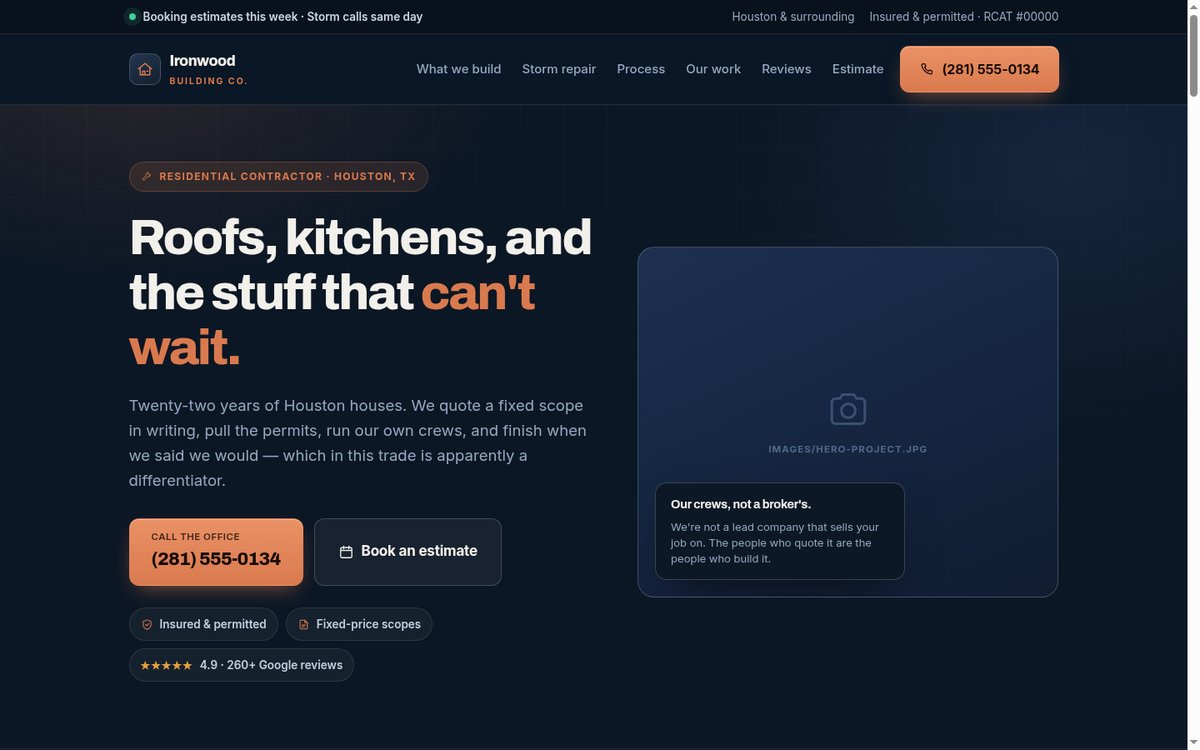
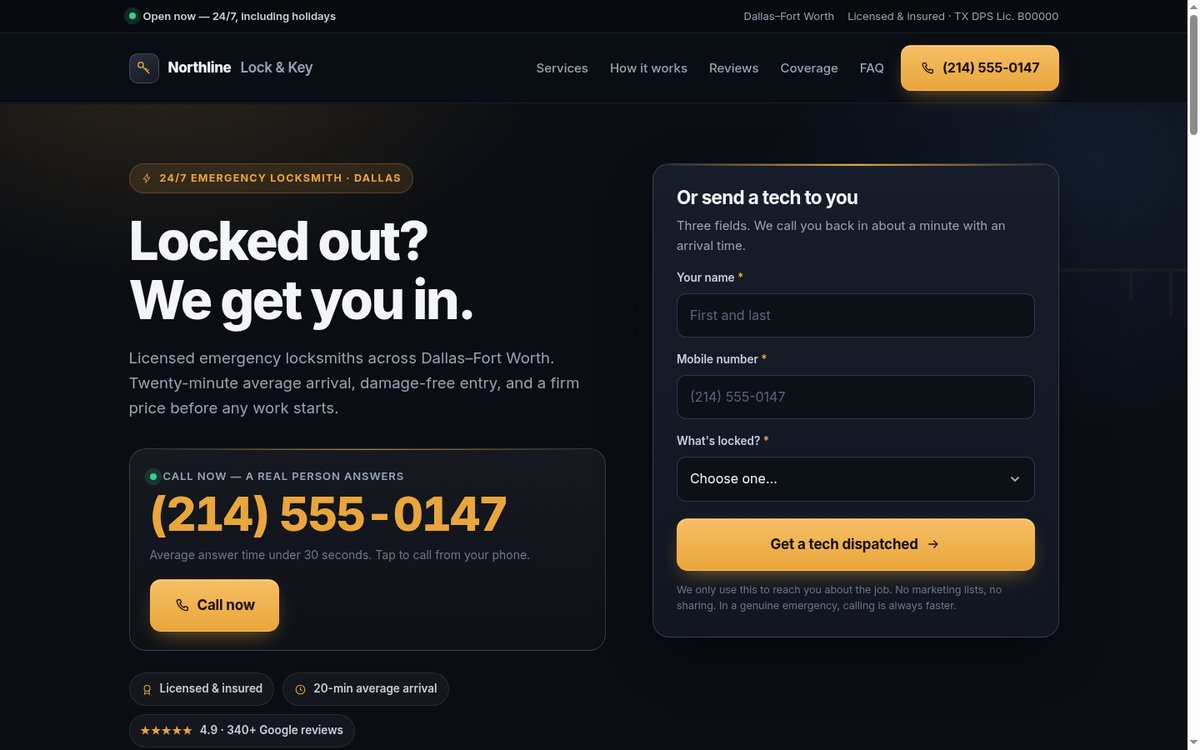
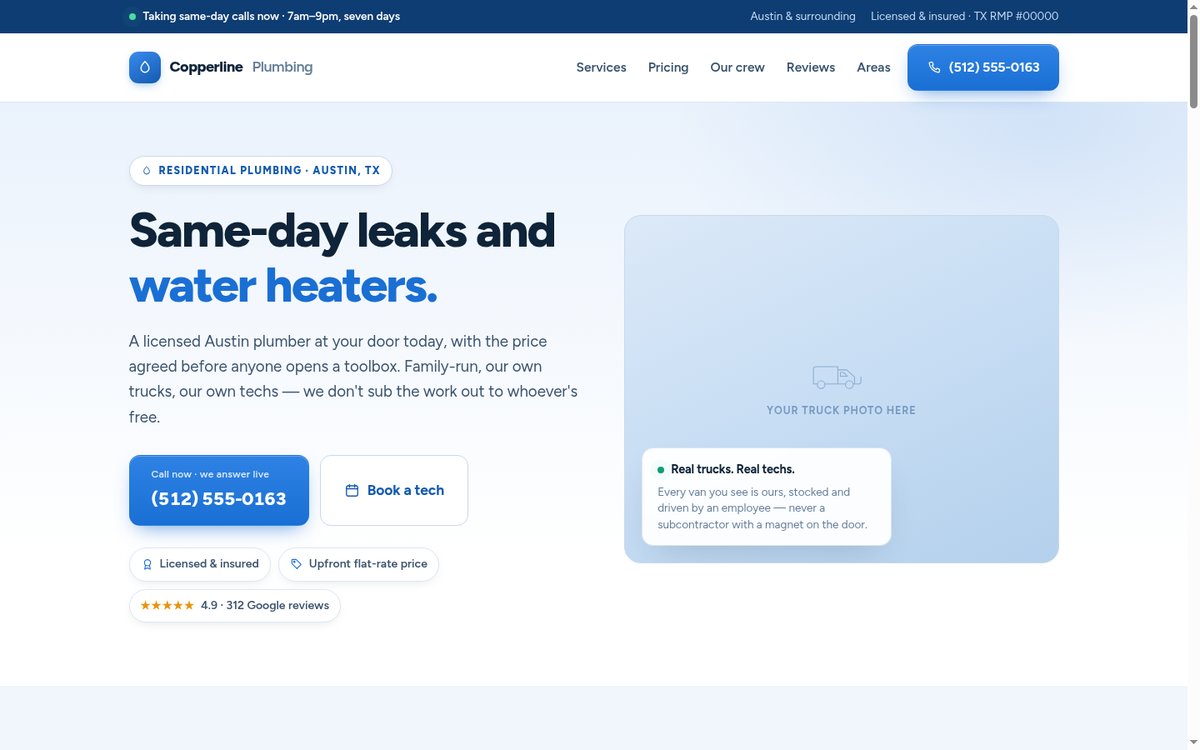
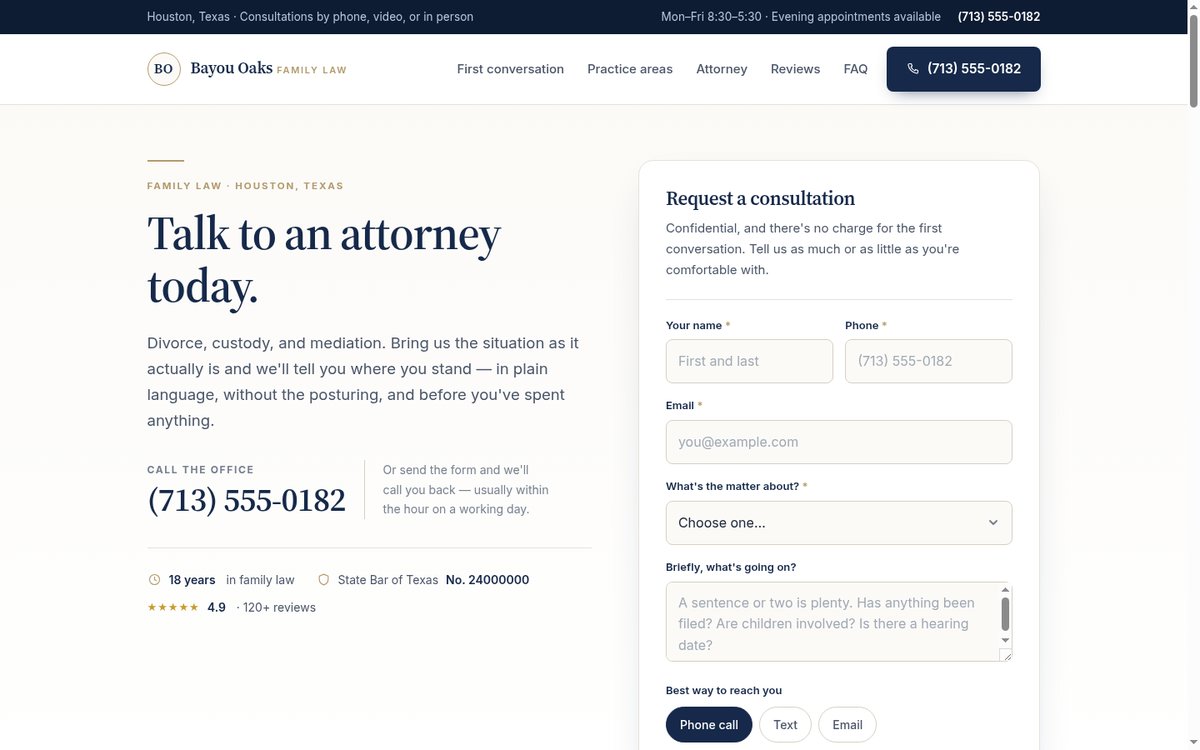
Focused pages for a service, product, campaign, or offer — matched to the rest of the site rather than bolted onto it. See demos ↓

04

Site speed & Core Web Vitals

Real diagnosis rather than a caching plugin and hope — images, render-blocking, database weight, hosting, and what's actually costing you seconds.

05

On-page & technical SEO

Indexing, metadata, canonicals, redirects, internal structure, crawlability, and the performance work that underpins all of it.

06

WordPress host-to-host migrations

Moves that account for DNS, SSL, email, redirects, staging, and rankings — not just the site files. Nothing touches the live domain until you've signed off on staging.

07

WooCommerce to Shopify

Products, variants, collections, customers, orders, and content moved into a cleaner storefront — with the old URLs redirected so earned traffic still lands.

08

Shopify setup & operations

Themes, navigation, collections, templates, payments, shipping, tax, and the apps a store actually needs — without the twelve it doesn't.

09

WordPress & Elementor repairs

Broken layouts, mobile issues, form failures, plugin conflicts, update damage, and Elementor cleanup that stops the bleeding.

10

Klaviyo flows

Welcome, abandoned checkout, browse abandonment, win-back, and post-purchase flows that read like the store they came from.

11

HubSpot & n8n automation

Forms wired to the CRM, follow-up sequences that fire reliably, and the workflows that stop leads sitting in an inbox all weekend.

Something else?

Most of this work starts as a question nobody could answer elsewhere. If it's adjacent to any of the above, it's worth asking.

Let's talk →
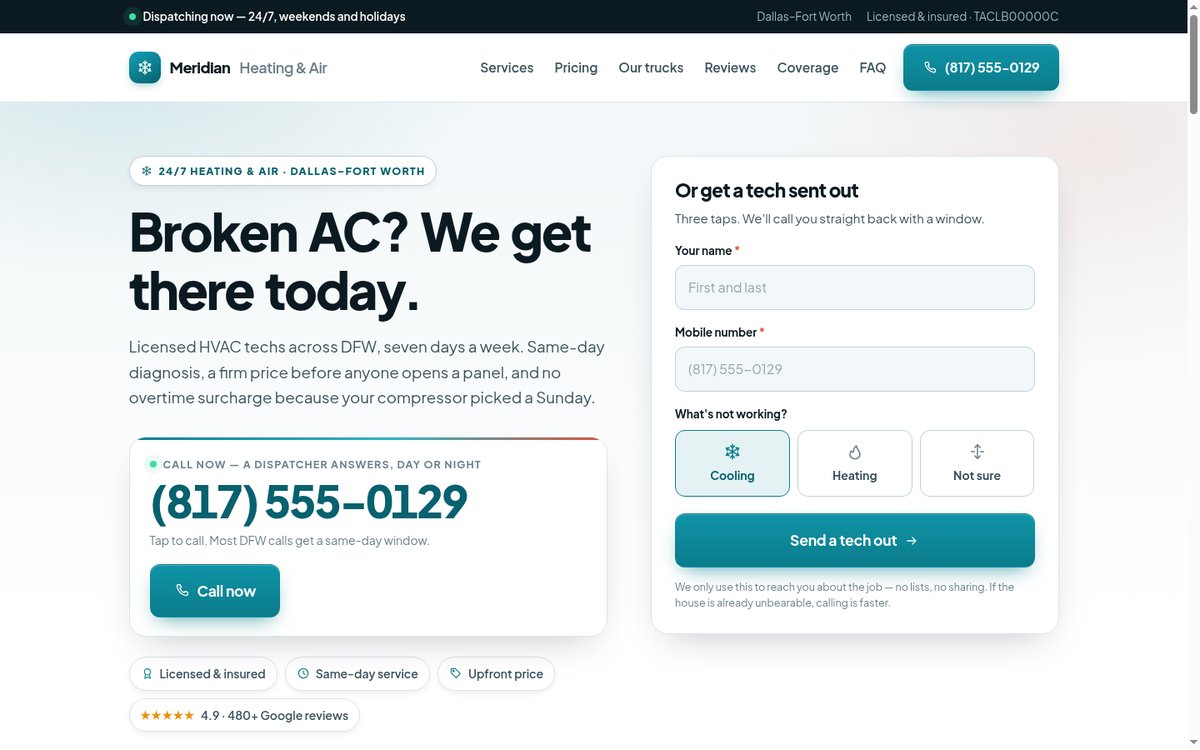
Demos & templates

Landing pages you can actually click.

Five built end to end — different trade, different palette, different typeface each time. Every one is a single self-contained file with a working form, click-to-call, structured data, and a sticky mobile call bar.

Each demo is spec work built to show range — the businesses in them are placeholders, and every phone number uses the 555 range reserved for fiction.

Half-built & abandoned

Someone started it and stopped replying.

It happens far more than anyone admits — a developer goes quiet, a freelancer disappears, an agency relationship ends badly, and you're left holding a login and a site that's eighty percent of the way to nowhere.

Send whatever exists. A staging URL, a half-built theme, a folder of files, a Figma nobody built. You'll get an honest read on whether it's worth finishing or worth restarting — and what each one costs — before you commit to either.

  • No judgement about the state it's in, and no lecture about the last person.
  • An honest finish-or-restart answer, even when finishing is the smaller job.
  • A written scope, so you know where it ends before it begins.
  • Access handed back clean — hosting, domain, and repo in your name.
  • Documentation, so the next person isn't in this position again.

How it works

Four steps, and you see it before it's live.

Handing over a working site to a stranger is the uncomfortable part. This is built to make that as low-risk as it reasonably gets.

1

Send the current setup

Site URL, current host or platform, and a plain description of what needs to move or what isn't working. No brief required.

2

You get a scope and a price

Written, fixed where the work allows it, with what's included and what isn't stated plainly. If it's not worth doing, that gets said too.

3

Work happens on staging

The live site keeps running untouched. You review a real, working copy — not screenshots — and nothing goes live until you've said so.

4

Launch, then check again

Redirects, SSL, email, forms, and indexing verified after the switch. Access and documentation handed over in your name.

The detail

What a migration actually includes.

Most migrations that go wrong go wrong in the same few places — email stops arriving, old URLs 404, or the rankings quietly evaporate a fortnight later.

This is the list. It doesn't change depending on how big the invoice is.

  • DNS and nameserver cutover, timed to minimise downtime
  • SSL reissued and HTTPS enforced on the new host
  • Email continuity — MX and mail records preserved
  • Full redirect map, every old URL pointed somewhere real
  • Staging copy reviewed and approved before cutover
  • Search Console and sitemap resubmitted after launch
  • Post-launch crawl and a 404 sweep, not just a homepage glance
  • A rollback plan that exists before it's needed

A useful starting point

Send the current setup, not a polished brief.

Writing a specification for work you don't do is its own job, and it's not one you should have to finish before anyone will talk to you. A URL and two honest sentences is genuinely enough to start.

Enough to begin
  • The site URL — or a staging link, if it isn't public yet
  • The current host or platform, if you know it
  • What needs to move, or what isn't working
  • Anything with a date attached to it

Contact

Have a site that needs attention?

Fill in whatever you know and leave the rest blank. You'll get a reply from a person who has read it, usually within one working day.

hello@patternseven.com
Please add your name.
Please check the email address.
A URL helps more than anything else here.
Pick whichever is closest.

Used only to reply to you about this project. No list, no sharing, no follow-up sequence.